
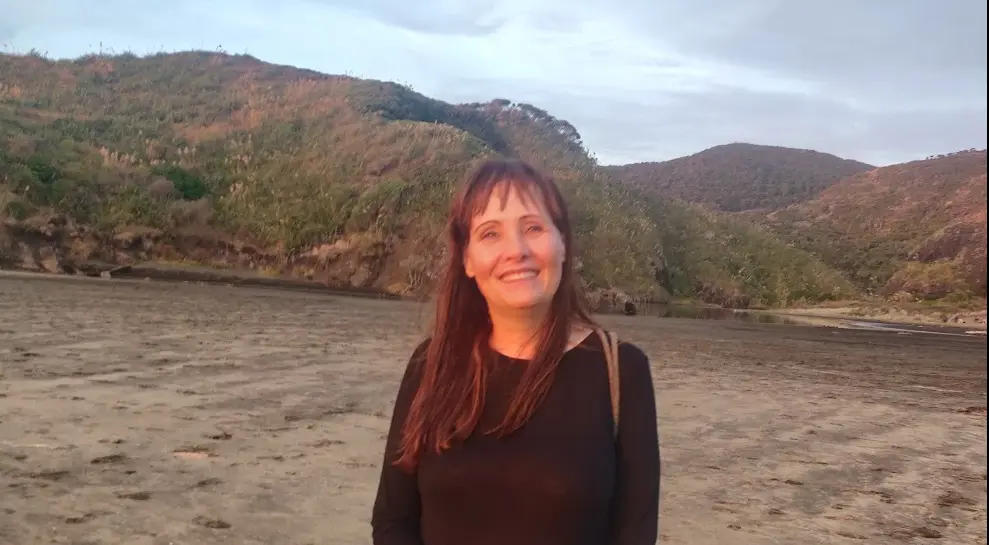
Hi, I’m Anna Keyter, founder of Online Therapy New Zealand. As a Mental Health Professional with over 20 years of experience, I’ve always believed therapy should meet people where they are — physically, emotionally, and geographically. That belief took on new meaning after COVID, when the world paused and I realised life is short. I wanted the ultimate work-life balance: earning an income online while exploring the world, staying connected to purpose, and living with curiosity and openness.
That’s when I fully embraced being a digital nomad.
Today I deliver online therapy to wonderful clients across New Zealand from wherever I happen to be. I have a fixed home base in the UK, but I spend meaningful periods in Aotearoa — working, contributing taxes through IRD, and immersing myself in the land and people I serve. The lifestyle has taken me on incredible journeys: traveling throughout New Zealand’s wild coastlines, mountains, and forests when I was there; exploring Australia’s vast outback and vibrant cities; discovering South Africa’s landscapes and warmth; and now wandering the UK — from the dramatic Highlands of Scotland to the rolling hills of Wales. Soon I’ll head to Singapore and then the Balkans, each place adding new layers to how I show up for my clients.
The Stress of Nomad Culture
Being a digital nomad gives me a profound sense of purpose. The freedom to work from anywhere keeps my therapeutic lens wide and alive — I bring fresh perspectives from every landscape and culture into sessions. The challenges exist, of course: systems still expect a single fixed address. When I’m in New Zealand earning and paying taxes, company documents and residency forms sometimes struggle with the idea that my permanent home is in the UK. Explaining “I’m here now, contributing fully, but my abode is overseas” can lead to extra questions. The world hasn’t quite caught up with citizens of the world who live and give across borders. But these moments have become teachers rather than burdens. They remind me to stay present (mindfulness at its best), to align actions with values (hello, ACT), and to trust my capacity to adapt. The very friction builds resilience, clarity, and a deeper appreciation for flexibility.
Here is how the nomad path affects Mental Health
Purpose through movement
Every new place deepens my empathy and curiosity — qualities I bring directly into therapy.
Freedom & joy in balance
Earning online while waking up to different skies creates a rhythm that feels deeply alive and meaningful.
Growth through adaptation
Navigating dual systems sharpens patience, problem-solving, and self-trust — skills that strengthen both me and my clients.
Connection that transcends place
My strongest ties are with the people I support — many in New Zealand — through consistent, heartfelt online sessions. True belonging, I’ve learned, lives in relationships, not postcodes.
The Stress of Nomad Culture can creep into all aspects of life.
For instance, as a therapist, I ensure every client has a confidential, private space — whether through encrypted online sessions or in my closed, professional office settings when we meet face-to-face. The nomadic rhythm only enhances that safety by letting me show up with lived experience of transition, wonder, and balance. If you’re drawn to a life of purpose across borders — or already living it and sometimes feeling the pull of systems that haven’t caught up — know that this path can be both challenging and extraordinarily rich.
In Conclusion
Digital nomad mental health flourishes when we celebrate the freedom, the growth, and the deep sense of aliveness it brings. Online therapy can help you stay grounded, connected, and joyful in your unique journey. I’d love to hear your story. Reach out — I’m here to walk alongside you, wherever you are.

Book a Session with Anna Keyter
Online counselling via secure video – choose the session that feels right for you below.
50-Minute Individual Session
$180
Click to open Calendly and select a convenient time.
References for The Stress of Nomad Culture:
Figueiredo, E. et al. (2024). Teleworking effects on mental health—A systematic review. PMC, Article PMC10970114.
Hill, P. L., et al. (2024). Cultural stress and immigrant well-being: The role of sense of purpose. PubMed, Article 38635221.
Miguel, C. (2023). It’s not all shiny and glamorous: Loneliness and fear of missing out among digital nomads. ScholarSpace.
Rodriguez, C. (2023). #Vanlife. Berghahn Journals, Volume 32 Issue 2.
Torres, M. (2025). The associations between culture-related stressors and prosocial behaviors in U.S. Latino/a college students: The mediating role of cultural identity. MDPI, Article 5/1/4.