
 23 Sep 2026
BY: Online Therapy
Counselling
Comments: No Comments
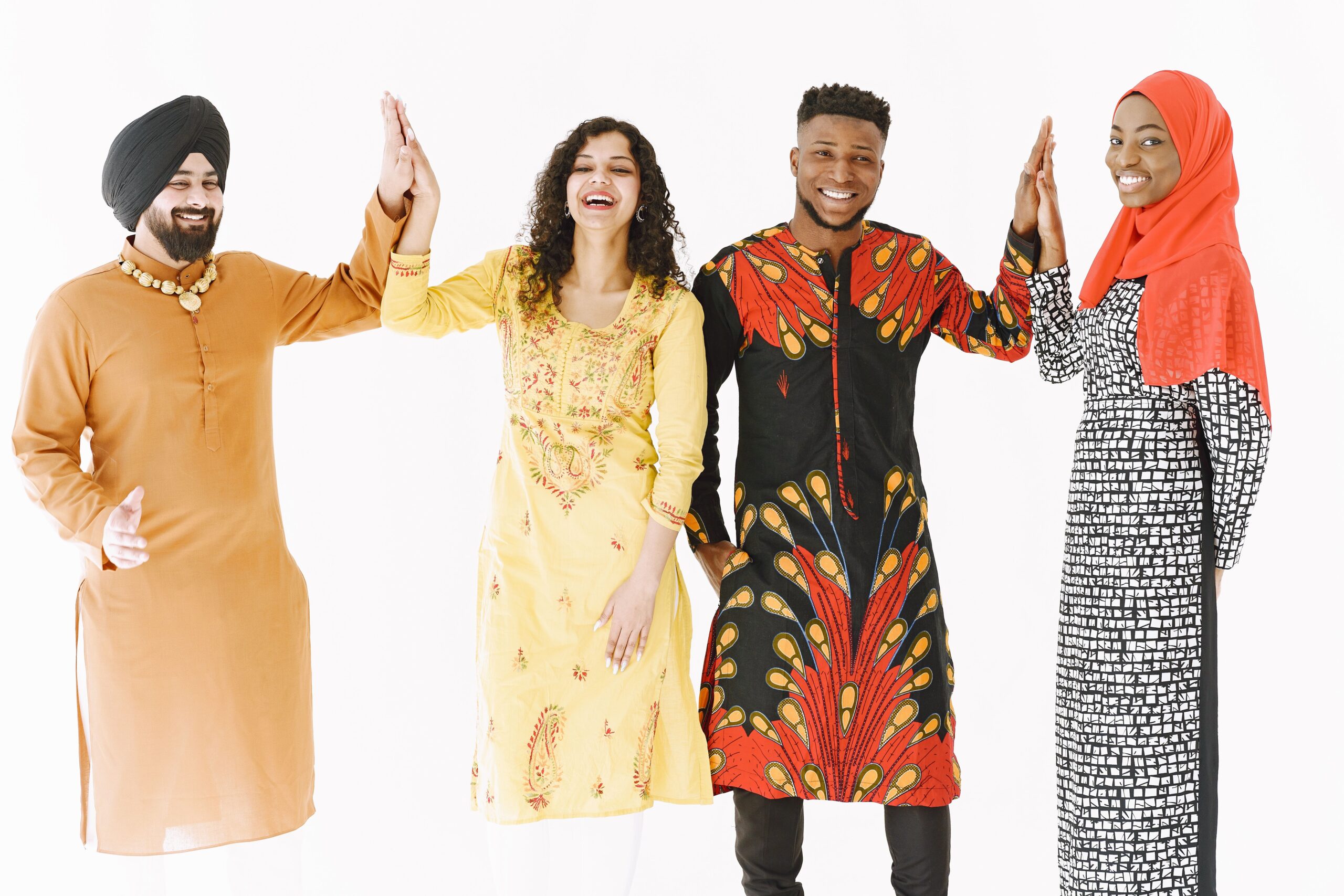
Cultural Safety: Bias, assumptions, and the work of noticing (Article by Anna Keyter and Photo by Gustavo Fring)
On 23 September 2026, the Mental Health Professionals’ Network asked a deceptively simple question: what gets in the way of being culturally safe? The panel was multidisciplinary — clinical psychologist Dr Averil Cook, cultural safety and equity lead Erin Joyce, LGBTQIA+ program officer and peer worker Amity Mara, and Wakka Wakka GP Dr Joel Wright, facilitated by Mish Kumar-Jonson. Their starting point was MHPN’s own brief: bias is a normal part of being human. Even with the best intentions, it can become a barrier to culturally safe and inclusive care, especially when it is difficult to see or hard to respond to (Mental Health Professionals’ Network [MHPN], 2026).
Cultural Safety Is Not Declared by the Clinician
Cultural safety is not a badge the practitioner awards themselves. In Australian health regulation, the person, family, and community receiving care determine it. Ahpra’s definition is blunt: culturally safe practice is ongoing critical reflection on knowledge, skills, attitudes, practising behaviours and power differentials, in the service of care that is safe, accessible, responsive and free of racism (Australian Health Practitioner Regulation Agency [Ahpra], n.d.).
That definition was developed in relation to Aboriginal and Torres Strait Islander peoples. The principle travels. The concept itself comes from Māori nurse and educator Irihapeti Ramsden, who argued that safe service is defined by those who receive it, not by those who deliver it (Ramsden, 2002; Nursing Council of New Zealand, 2011). Whether the person in front of us is First Nations, queer, disabled, Blind, from a racialised community, or part of a workplace culture we do not share, cultural safety is an experience, not an intention. The question is not “Did I mean well?” It is “Did this person feel respected, unstereotyped, and able to remain in charge of their own meaning?”
The carer is not the expert on the other person’s culture. Humility and curiosity matter more than a rescue narrative. People are not arriving to be saved. Cultural humility, as Tervalon and Murray-García (1998) framed it, is a lifelong stance of self-critique, attention to power, and partnership — not mastery of a finite list of cultural facts.
That is the difference between cultural competence-as-checklist and cultural safety. Competence can become: learn the facts, apply the category, and move on. Cultural safety asks the practitioner to stay in a relationship without assuming they already know who the person is.
Culture is Wider than Ethnicity
The discussion treated culture as more than country of origin. Culture lives in communities of experience: queer community, blind community, disability culture, professional teams, family systems, and faith groups. Each has norms, language, history and ways of reading risk. A person may belong to several at once. The Nursing Council of New Zealand (2011) definition already included age, gender, sexual orientation, occupation, socioeconomic status, ethnicity, faith and disability within “culture”.
That stops cultural safety from becoming a special-interest add-on for “diverse clients”. Every encounter includes culture — including the culture of the clinic, the risk form, and the multidisciplinary team. Inclusive care begins when those institutional cultures are made visible rather than treated as neutral (Australian Institute of Health and Welfare [AIHW], 2023).
Bias is ordinary. Unexamined bias is the problem.
A psychologist on the panel put it cleanly: bias sits in everyone. The work is not to pretend otherwise. The work is to notice it early enough to think, rather than to act it out.
That claim is consistent with the research. Implicit bias is common among clinicians and is associated with differences in communication, trust and treatment decisions, even when people reject prejudice at a conscious level (FitzGerald & Hurst, 2017; Hall et al., 2015). If bias is framed as a character flaw, people hide it. If it is framed as a human cognitive habit that becomes dangerous when invisible, people can get curious. Discomfort and uncertainty are not evidence that something has gone wrong. They are often evidence that something important has come into view.
Bias rarely arrives as open hostility. It creeps. It arrives as a sentence that feels efficient, a diagnosis that feels tidy, a risk rating that feels prudent. By the time it is named, it has often already shaped the plan.
How assumptions get in the way of cultural safety
One of the most practical problems named was the workplace habit of deciding on limited information. Referral letters, triage notes, visible identity markers, and previous diagnoses can lead the mind to fill in the gaps. The person has not yet spoken, but a story is already running.
Two forms of that story were particularly clear.
Pathologisation, particularly in LGBTQIA+ care. When gender, sexuality or relationship structure is treated as the problem rather than as context, attention slides off the actual presenting concern. Distress that belongs to stigma, rejection, minority stress or service harm can be rewritten as individual disorder (Meyer, 2003; Frost & Meyer, 2023). Affirmation is delayed, questions become intrusive, and the person learns that honesty is costly. That pattern has a long clinical history: same-sex attraction was listed as a mental disorder, and gender diversity has repeatedly been framed through a pathology lens rather than through stigma and structural harm (Drescher, 2015).
The experience of bias is racialised for people of colour. From a person of colour’s standpoint, bias is often not abstract. It is the accumulated experience of being read as risk, non-compliance, “complexity” or cultural deficit before the clinical picture has been properly heard. That reading does not only wound. It changes what people disclose, whether they return, and whether they trust the next practitioner (Paradies et al., 2015; AIHW, 2023).
Both patterns share a mechanism: a fragment is promoted to certainty. Certainty then justifies action. That is how cultural safety is lost before the session has properly begun.
When “safety work” becomes unsafe
The panel also named a quieter harm: seeing risk where the risk is not that large and escalating when escalation is not needed. Over-response can feel like good practice because it is wrapped in the language of duty. In reality, it can be a risk in itself.
Unnecessary escalation can mean a family meeting that strips privacy, a security presence that turns distress into threat, a notification made from stereotype rather than evidence, or a restrictive intervention that confirms the person’s fear that services are dangerous. For communities already over-surveilled — First Nations people, disabled people, queer young people, people who use substances — the clinic’s idea of safety and the person’s experience of cultural safety can pull in opposite directions (Human Rights Watch, 2020; Royal Australian and New Zealand College of Psychiatrists [RANZCP], 2021).
Minimising risk, in the sense MHPN used the phrase, is not about becoming naïve. It is about matching the response to the actual situation, not to the practitioner’s anxiety or to a cultural script about who is dangerous (MHPN, 2026).
What helps when bias is already in the room?
- Slow the leap from fragment to formulation. Ask what is known, what is inferred, and what belongs to the practitioner’s history rather than the person’s.
- Treat the person as the authority on their own safety. Invite them to say what would make this encounter safer, including language, who is in the room, and what should not be assumed (Ahpra, n.d.; Ramsden, 2002).
- Replace rescue with partnership. Curiosity is not interrogation. Humility is not passivity. The practitioner still holds clinical responsibility, but not cultural ownership (Tervalon & Murray-García, 1998).
- Watch the risk pathway. Before escalating, ask whether the same presentation in a different body, accent, family structure or sexuality would have produced the same response.
- Use discomfort as data. Unease often signals an unexamined assumption, a power difference, or a limit in knowledge. That is a prompt for supervision and collaboration, not a prompt to tighten control.
- Work across disciplines on purpose. Different professions notice different distortions. A peer worker, a GP, a psychologist and a cultural safety lead will not all miss the same thing.
The point of cultural safety
Culturally safe and inclusive care is now a stated priority for governments and mental health organisations (MHPN, 2026). That policy language only becomes real in small moments: the pronoun used without fuss, the diagnosis that is not stretched to explain a whole identity, the risk call that is proportionate, the apology when an assumption lands badly, and the second question asked instead of the first conclusion.
Bias will keep arriving. Pathologisation will keep offering itself as a shortcut. Limited information will keep masquerading as enough. The invitation is not to become people without bias. It is to become people who can catch the bias in time — and who can tolerate the uncertainty that follows.
Respect without stereotyping is not a soft extra. It is how care stays accurate. When the person receiving care is the one who decides whether the encounter was safe, the practitioner’s task becomes clearer. Stay humble. Stay curious. Do not confuse control with care. And do not mistake the urge to save someone for the work of standing with them.
References
Australian Health Practitioner Regulation Agency. (n.d.). Aboriginal and Torres Strait Islander Health Strategy: Definition of cultural safety for the National Scheme. https://www.ahpra.gov.au/About-Ahpra/Aboriginal-and-Torres-Strait-Islander-Health-Strategy
Australian Institute of Health and Welfare. (2023). Cultural safety in health care for Indigenous Australians: Monitoring framework. https://www.aihw.gov.au/reports/indigenous-australians/cultural-safety-health-care-framework
Drescher, J. (2015). Out of DSM: Depathologizing homosexuality. Behavioral Sciences, 5(4), 565–575. https://doi.org/10.3390/bs5040565
FitzGerald, C., & Hurst, S. (2017). Implicit bias in healthcare professionals: A systematic review. BMC Medical Ethics, 18, Article 19. https://doi.org/10.1186/s12910-017-0179-8
Frost, D. M., & Meyer, I. H. (2023). Minority stress theory: Application, critique, and continued relevance. Current Opinion in Psychology, 51, Article 101579. https://doi.org/10.1016/j.copsyc.2023.101579
Hall, W. J., Chapman, M. V., Lee, K. M., Merino, Y. M., Thomas, T. W., Payne, B. K., Eng, E., Day, S. H., & Coyne-Beasley, T. (2015). Implicit racial/ethnic bias among health care professionals and its influence on health care outcomes: A systematic review. American Journal of Public Health, 105(12), e60–e76. https://doi.org/10.2105/AJPH.2015.302903
Human Rights Watch. (2020). “He’s never coming back”: People with disabilities dying in Western Australia’s prisons. https://www.hrw.org
Mental Health Professionals’ Network. (2026, September 23). What gets in the way of culturally safe and inclusive care? [Webinar]. https://mhpn.org.au/webinars/
Meyer, I. H. (2003). Prejudice, social stress, and mental health in lesbian, gay, and bisexual populations: Conceptual issues and research evidence. Psychological Bulletin, 129(5), 674–697. https://doi.org/10.1037/0033-2909.129.5.674
Nursing Council of New Zealand. (2011). Guidelines for cultural safety, the Treaty of Waitangi and Māori health in nursing education and practice. Nursing Council of New Zealand.
Paradies, Y., Ben, J., Denson, N., Elias, A., Priest, N., Pieterse, A., Gupta, A., Kelaher, M., & Gee, G. (2015). Racism as a determinant of health: A systematic review and meta-analysis. PLOS ONE, 10(9), e0138511. https://doi.org/10.1371/journal.pone.0138511
Ramsden, I. (2002). Cultural safety and nursing education in Aotearoa and Te Waipounamu [Doctoral thesis, Victoria University of Wellington].
Royal Australian and New Zealand College of Psychiatrists. (2021). Cultural safety (Position statement). https://www.ranzcp.org/clinical-guidelines-publications/clinical-guidelines-publications-library/cultural-safety
Tervalon, M., & Murray-García, J. (1998). Cultural humility versus cultural competence: A critical distinction in defining physician training outcomes in multicultural education. Journal of Health Care for the Poor and Underserved, 9(2), 117–125. https://doi.org/10.1353/hpu.2010.0233
You can contact Anna by completing this form: